
Nola, Nola, Nola.
What a weird, wonderful place.
I’ve been to New Orleans a whole bunch, and there’s always something new and fun to see. So much history. So many vampires. So much art. So much music. And oh yeah — so much yummy, yummy food.
In this blog post I thought I’d focus on ghosts.
In particular, musical ghosts.
Spirits that know how to play a toe-tapping ditty.
Believe it or not, there are a few of these tales rattling around.
Here’s a list of Groovy Ghoulies of New Orleans:
The Andrew Jackson Hotel Violinist
French Quarter
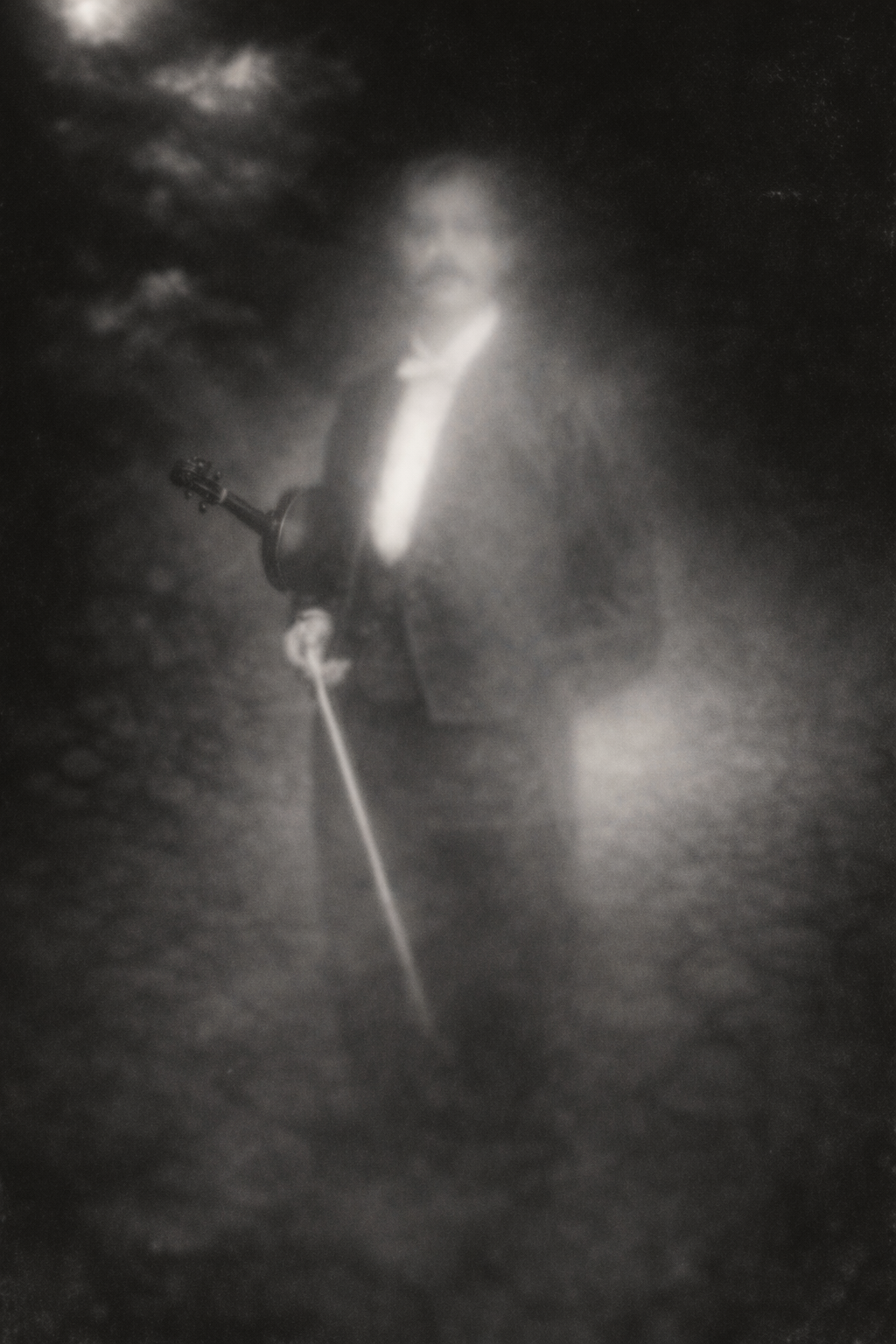
This one’s the old standby.
The reliable haunt.
The ghost you can always count on to show up late and play something sad.
People swear that late at night — usually well after midnight — a lone violin drifts through the courtyard of the Andrew Jackson Hotel. Not a fancy pantsy champagne party. Not busking street musicians. Just a lonely violin, slow and mournful, like it’s practicing for an audience that never quite arrives.
The story goes back to a 19th-century fire that killed several guests, including a German violinist. And apparently he’s still running scales.
The funny part is, if you go looking for the sound, it tends to stop.
As if the ghost knows you’re being nosy and decides to take five.
You’d think he’d wait around for a tip.
The Mahogany Jazz Club Musicians
French Quarter
The Mahogany Jazz Club is long gone, but nobody told the music.
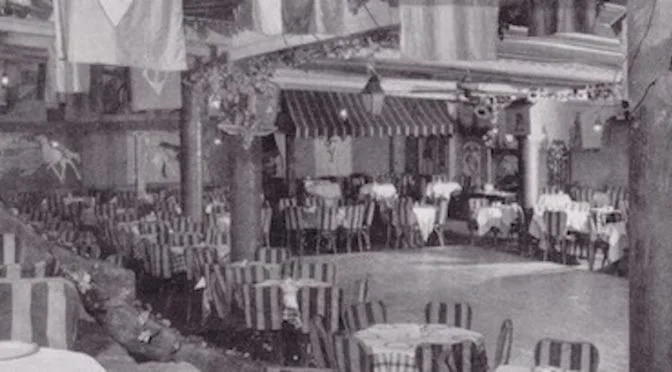
People who worked nearby talk about hearing jazz where there shouldn’t be any — a muted trumpet, a piano line, that low, comfortable hum of a band playing to a room that technically no longer exists.
There’s no single ghost attached to this one.
It’s more like the building itself refuses to accept closure.
Less “spooky apparition,” more “the band is on break, they’ll be back in a minute.”
Le Petit Théâtre — The Stage That Never Went Dark
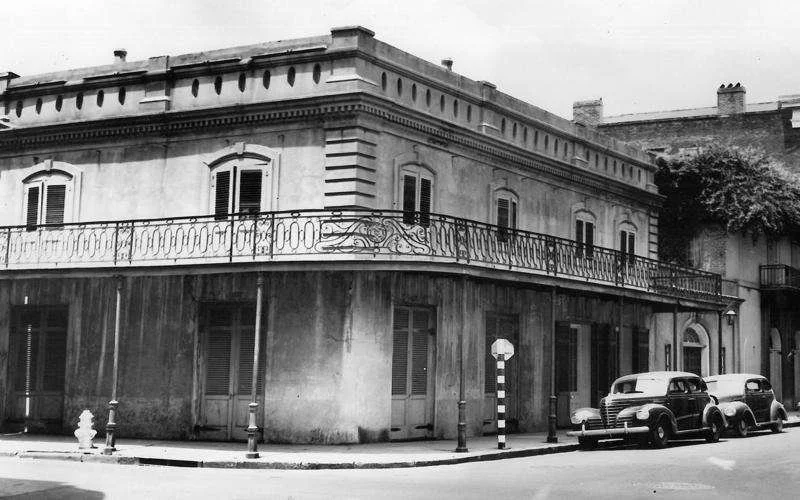
This one’s not about a specific musician, but it feels musical anyway.
Old theaters tend to do that.
At Le Petit Théâtre, actors and stagehands have reported footsteps, voices, and the unmistakable sense that something is rehearsing without them. Not performing — rehearsing. Running lines. Blocking a scene.
It’s as if the building remembers how to put on a show and occasionally decides to do it for itself.
In New Orleans, even the ghosts insist on good stagecraft.
I suspect these ones will stick around until the fat lady sings.
St. Louis Cathedral Area — The Singing Monk
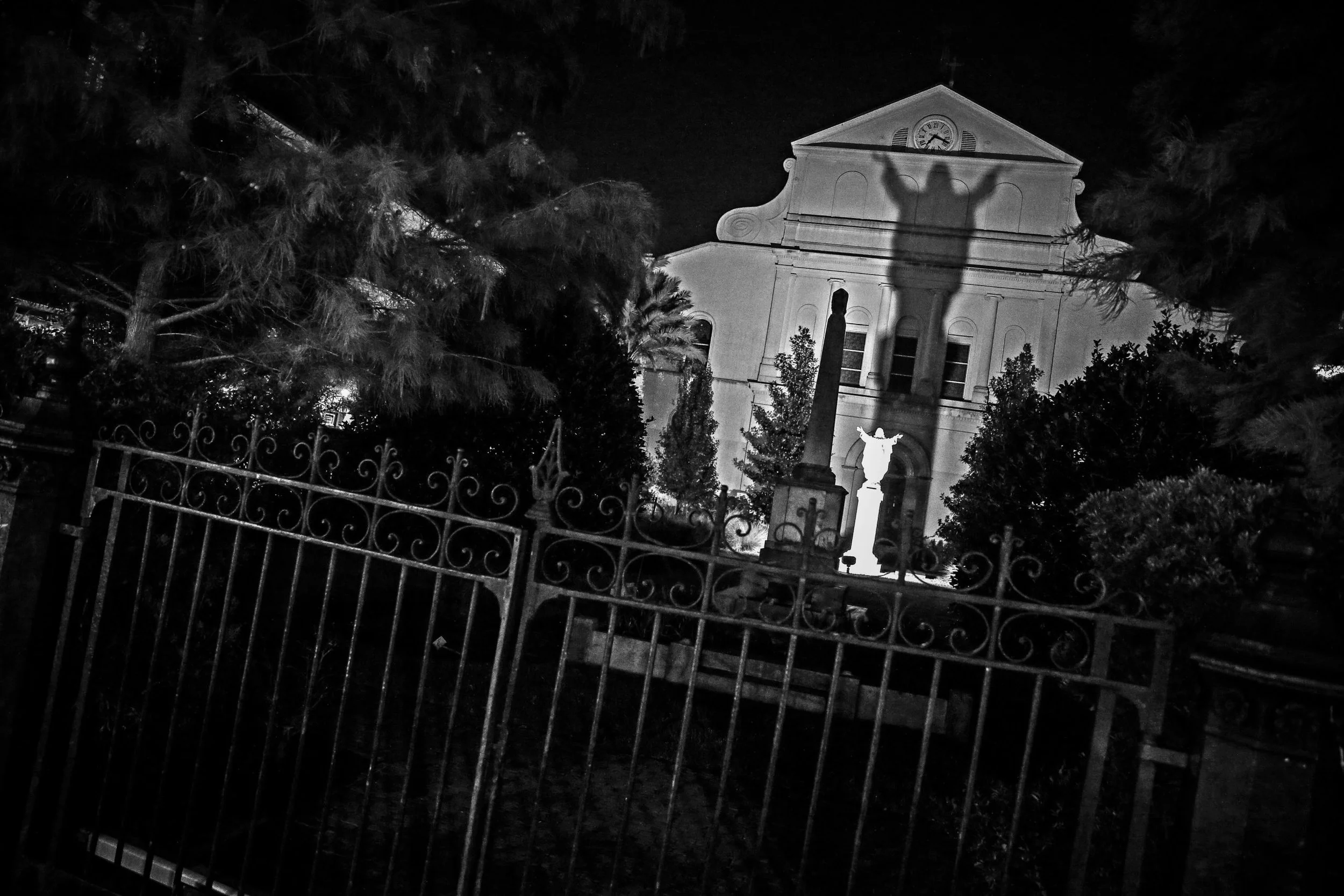
Père Dagobert shows up in stories like a rumor that won’t quite settle down.
A Capuchin monk from the 1700s whose ghost is said to sing or chant near the Cathedral gardens, especially when it rains.
This isn’t a showy ghost.
No jazz hands.
More hymn than tune.
People hear the voice and assume someone else must be around a corner or behind a tree. And then they look. And there isn’t.
Just the sound lingering a second longer than it should.
Maybe a monk who broke his vow of silence and didn’t want to get caught — even in the afterlife.
The Axeman Night (1919)
Not a Ghost, But Close Enough
Okay, not technically a ghost — but it belongs here.
And it’s crazy.
And a little biblical.
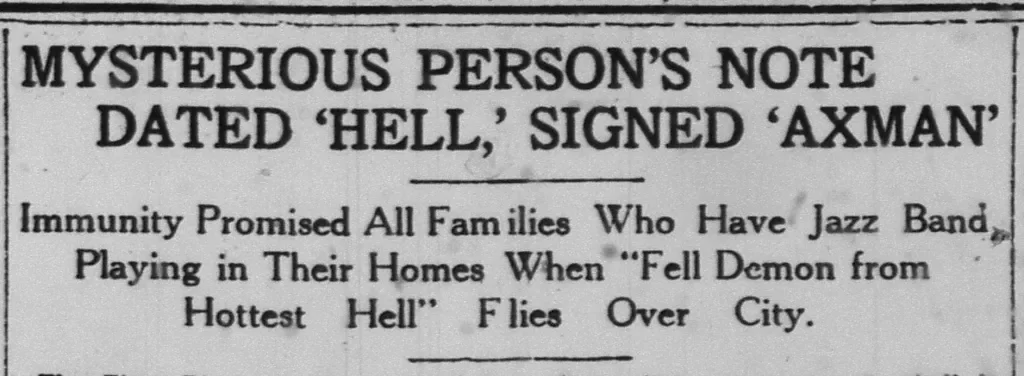
During the Axeman murders (yes, a real serial killer who used an axe — sometimes a razor), a letter appeared claiming the killer would spare anyone playing jazz on a specific night.
And New Orleans, being New Orleans, took that seriously.
Dance halls packed.
Bands played everywhere.
Music as protection.
Whether the letter was real almost doesn’t matter. What matters is that the city believed it. And for one strange night, jazz wasn’t entertainment — it was survival.
Some musicians say music is a way of life.
In this case, music was a way to stay living.
Shrine to the Haunted Tune
Workshop / Retreat
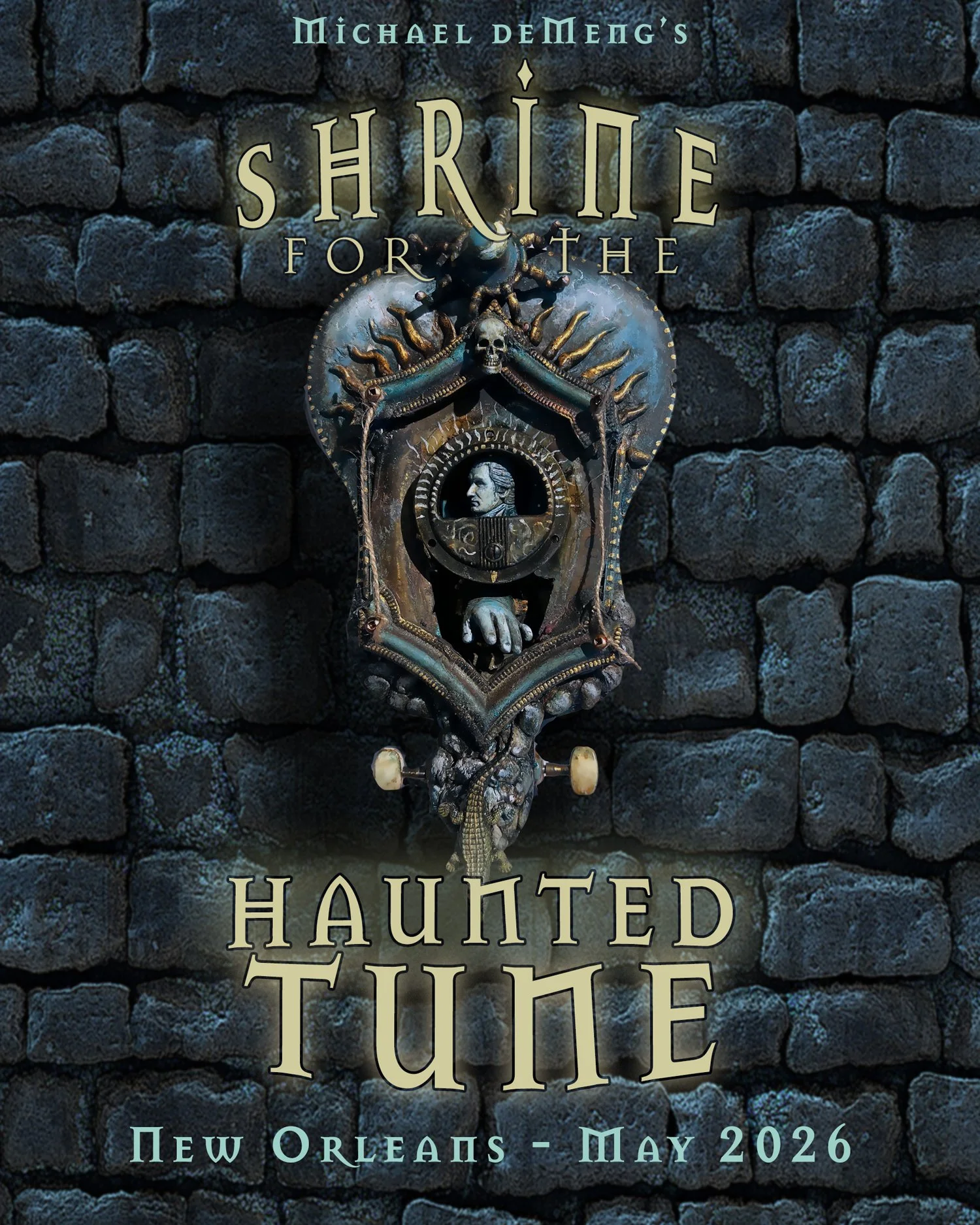
I mention all of this because I’m headed back this May to teach a class that feels right at home here.
New Orleans, Louisiana
May 6–13, 2026
We’ll be creating an honorarium to music — a visual song — built from instruments that once gave joy to the ears and still carry a little charge in their bones. This is no ordinary tribute. This is New Orleans, where even silence has a rhythm and every faded note lingers just a bit longer than it should.
Over the years, I’ve gathered a curious assortment of discarded instruments — trumpets that no longer toot, violins with stories carved into their cracked backs, piano keys stained by time. Their melodies may be gone, but their presence isn’t.
Some instruments never really go quiet.
Especially here.
In the workshop, we’ll retune those relics — not to play, but to speak — transforming battered banjos, lonely oboes, trumpet bits, and violin husks into sculptural shrines.
Think altar meets jukebox.
Think music you can see… and maybe feel.
And because this is New Orleans, the days won’t just be about the studio. We’ll wander the Bywater, haunt junk shops, visit artists’ spaces, dress up for a ghost tour, soak up live jazz on Frenchmen Street, take to the swamp, and finish with a Louisiana seafood boil.
Art making by day.
Ghosts and music by night.
Because in this town, the line between sound and spirit is thin.
And sometimes the best way to honor a song is to give it a body and let it keep dancing.